Gas kits are safe when the kit and cylinder are approved, the fitting is done properly, and the cylinder is tested on time. A legal conversion also has the fuel change recorded on your RC.
We use approved kits, fit them at our own workshops and help you with the RTO paperwork.
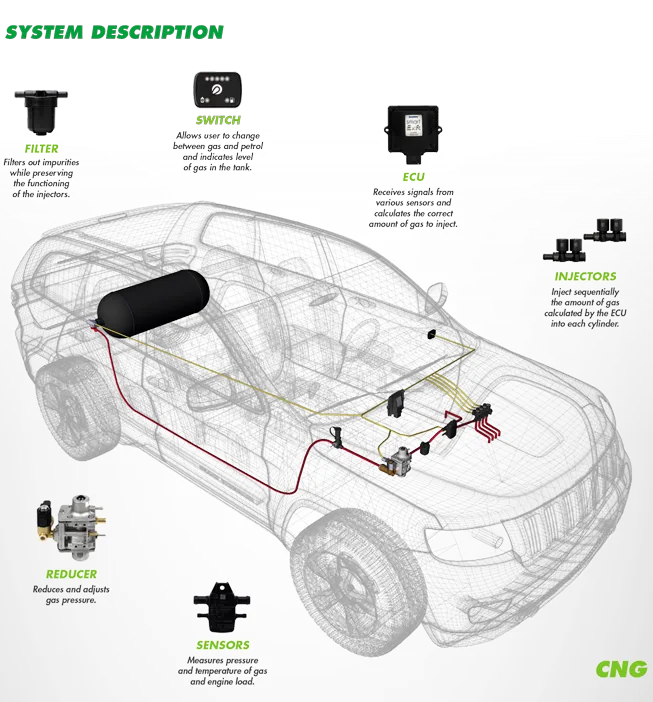
The kit and cylinder should carry the approvals required for your vehicle. Ask for the certificates and keep them with the car. Avoid unmarked or unbranded kits.
A poorly routed pipe or loose fitting is the usual cause of trouble. Our technicians fit the kit, then check every joint for leaks.
Once fitted, the CNG or LPG fuel must be recorded on your RC at the RTO. You will need your RC, insurance and pollution certificate. We handle the documentation for you.
Tell your insurer about the fuel change so your policy stays valid.
CNG cylinders need periodic hydro-testing. The interval is commonly every three years for private cars, but follow the date on your cylinder certificate and what your RTO requires.
Stop the car in an open place, switch off the engine, keep flames and sparks away, and move people away from the car. Call a qualified technician before driving again.
Rules and fees change. The transport authority sets the RTO requirements, and they can be updated. We will confirm what applies to your car when you visit.
Call us before you convert and we will explain what your car needs.